Guide
Walk-In Cooler Not Holding Temperature? A Commercial Operator's Guide
Why a commercial walk-in cooler or freezer runs warm, what you can check safely, and when to call for emergency refrigeration repair before you lose inventory.
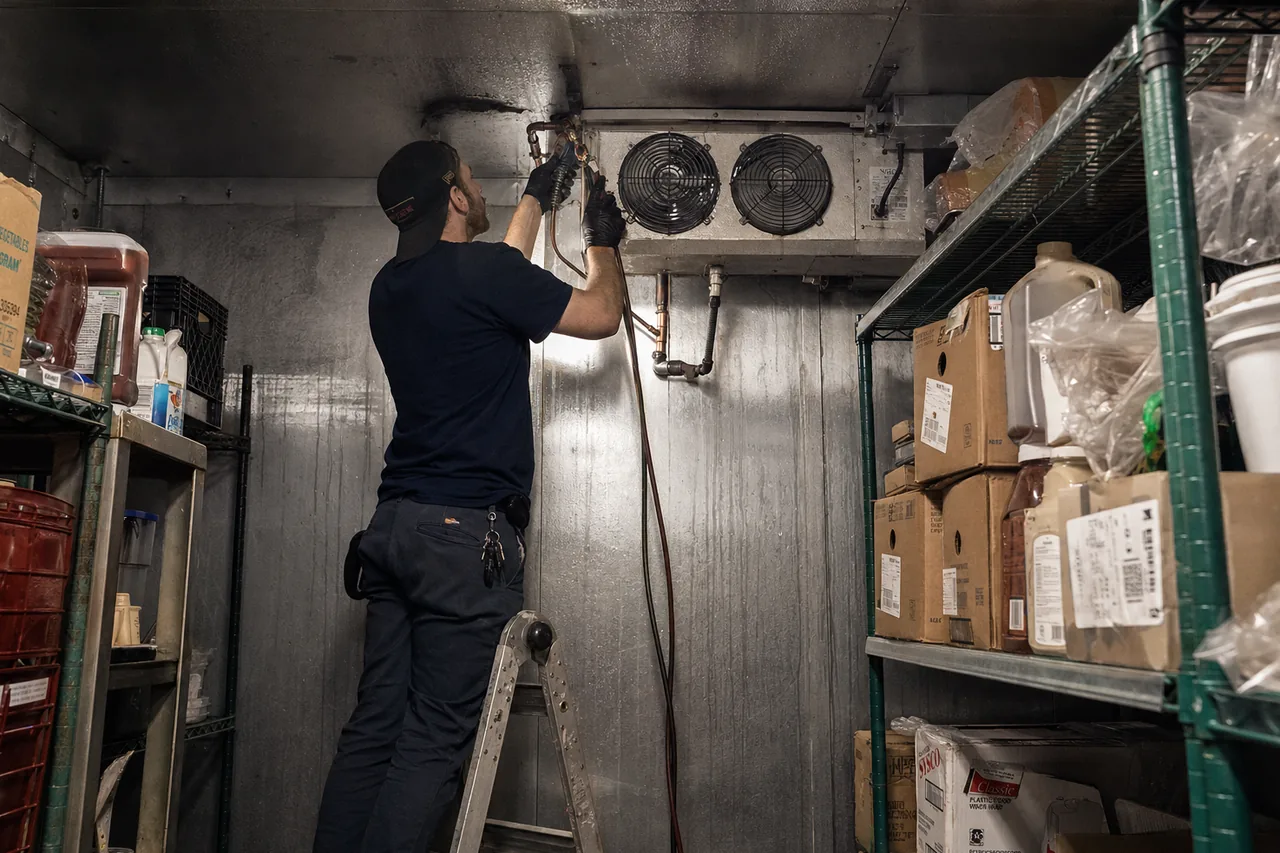
A walk-in cooler or freezer that starts climbing is the most expensive failure a commercial kitchen can face. Your entire inventory sits inside, and once the box crosses 41°F, potentially hazardous food is on a clock — both for spoilage and for the health code. This guide explains the common causes, the few things you can safely check yourself, and when to stop and call for emergency refrigeration repair.
Why is my walk-in running warm?
Most warm-box calls trace to one of a handful of causes. A dirty condenser is the number-one culprit in a greasy kitchen: airborne grease packs the coil, head pressure climbs, and the system loses capacity until it can’t hold temperature. A refrigerant leak slowly starves the sealed system so the box runs constantly but never gets cold. An iced-over evaporator from a failed defrost heater, timer, or termination thermostat blocks airflow across the coil. A failed condenser or evaporator fan motor kills heat exchange. And a door left ajar, a torn gasket, or a failed anti-condensate heater lets warm, humid air pour in faster than the system can remove it.
What you can safely check first
Before you call, a few quick checks can save time — and sometimes solve it:
- Confirm the door seals. Look for a torn gasket, a door propped or hung open, or product blocking it from closing. A bad seal is a common and simple cause.
- Check the condenser coil. If it’s caked with grease and dust, that alone can push a box warm. Note it for the technician (coil cleaning is part of the repair).
- Look at the evaporator inside. Heavy ice on the coil points to a defrost failure and blocked airflow.
- Listen and feel. Is the condensing unit running at all? Is the condenser fan spinning? A dead fan or a unit that won’t start is a clear fault.
- Read the temperature. Note how fast it’s climbing — that tells the technician how urgent the dispatch is.
Do not attempt sealed-system or refrigerant work, and don’t keep resetting a breaker that trips — those are signs of a real fault that needs an EPA-certified commercial technician.
Protect your inventory while you wait
If the box keeps climbing, keep the door shut to hold cold as long as possible, and be ready to move the most temperature-sensitive product (proteins, dairy, prepped items) to another cooler or freezer. Every hour above 41°F raises the odds of loss and a food-safety problem, so a warming walk-in is always a same-day, often after-hours, emergency.
When to call for emergency repair
Call immediately if the box is climbing with product inside, if the condensing unit won’t run, if you see a refrigerant leak, or if the temperature won’t recover after you’ve confirmed the door seals. A commercial refrigeration technician will measure the sealed system, check the condenser and evaporator, verify defrost operation, and get the box pulling down again — then address the root cause so it doesn’t recur during your next big week.
Preventing the next failure
A walk-in is your single most expensive point of failure, and most emergencies are preventable. Scheduled condenser cleaning every 30–90 days, defrost and sealed-system checks, gasket and door-heater inspection, and continuous temperature logging dramatically cut the odds of a mid-service breakdown — and keep you inspection-ready. If your walk-in is holding warm right now, don’t wait: call for emergency commercial refrigeration repair before inventory is lost.